


Understanding Different HVAC Systems: Types, Benefits, and How to Choose the Right One
HVAC systems are the collection of heating, ventilation, and air conditioning technologies that control indoor comfort by moving heat, conditioning air, and managing humidity for homes and businesses. This guide explains the main HVAC system types, how each works, and the trade-offs of central air, ductless mini-splits, heat pumps, and furnaces so you can choose the best fit for your property. Many homeowners struggle to compare efficiency metrics like SEER, AFUE, and HSPF against installation cost and home layout, so this article provides clear comparisons, practical maintenance advice, and climate-specific guidance tailored to Treasure Valley and nearby Oregon locales. You will learn component-level mechanics, decision checklists, maintenance tasks to maximize lifespan, and how local service providers support installation and upkeep. The sections below cover the main system families, central AC mechanics, ductless benefits, heat pump types and local suitability, furnace fuel comparisons, a decision framework, essential maintenance, and how Econo Air LLC supports homeowners with installations and service. Understanding these systems in practical terms—cost, efficiency, and maintenance—prepares you to make a confident selection for your home.
What Are the Main Types of HVAC Systems?
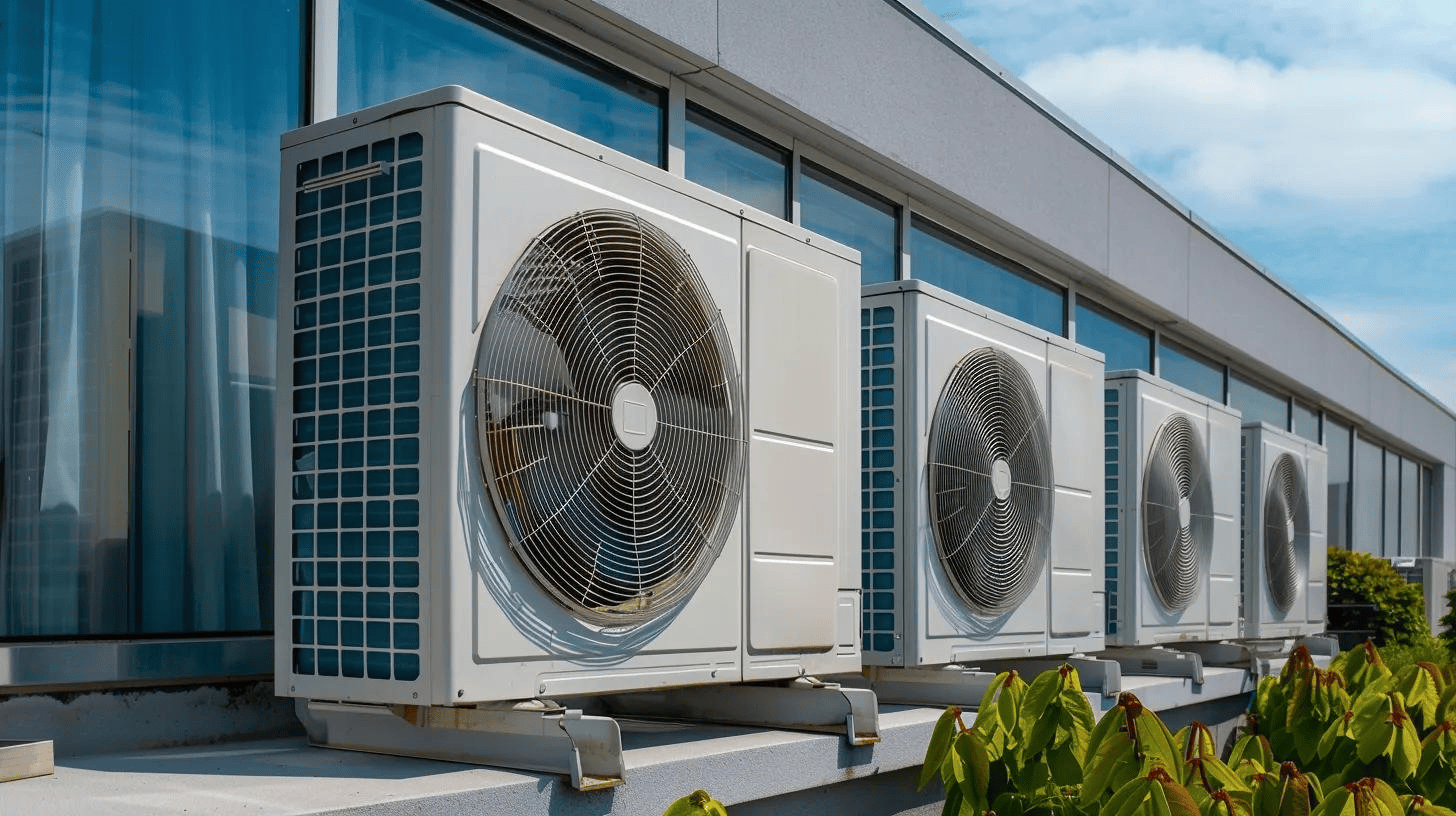
The main HVAC categories cover central split systems, ductless mini-splits, heat pumps (air-source and geothermal), furnaces, boilers and packaged units, each offering different approaches to heating and cooling. Central split systems separate the condenser and evaporator to move refrigerant for cooling and pair with a furnace for heating; ductless mini-splits use an outdoor compressor with indoor heads to deliver zoned comfort without ductwork. Heat pumps transfer heat both directions for efficient heating and cooling, while furnaces generate heat from fuel or electricity; boilers circulate hot water or steam in hydronic systems. These system families determine suitability by home layout, existing ductwork, local climate, and efficiency priorities, so understanding their core mechanics helps homeowners match technology to needs. The next subsection shows which setups are most common in residential homes and why typical pairings emerge.
Which HVAC System Types Are Most Common in Residential Homes?
Residential setups most often include a gas or electric furnace paired with central air conditioning as a split system, especially in homes with existing ductwork, because this combination leverages forced-air distribution. Older homes without ducts commonly adopt ductless mini-splits or packaged units during retrofits to avoid costly duct installation, while newer construction may use heat pumps to meet efficiency and electrification goals. In the Treasure Valley, many homeowners retrofit efficient heat pumps or high-SEER central systems to balance summer cooling and winter heating requirements, making climate and home age central factors in system selection. Recognizing these typical pairings helps homeowners anticipate installation complexity and likely operating costs, which leads into a clear comparison of ducted versus ductless systems.
How Do Ducted and Ductless HVAC Systems Differ?
Ducted systems distribute conditioned air through a network of ductwork and an air handler, offering whole-home uniformity and easy integration with central filtration and humidification, while ductless systems use localized indoor heads connected to an outdoor compressor to deliver zoned control. Ducted setups can suffer from duct losses and require regular sealing to maintain performance, whereas ductless mini-splits avoid duct losses and let homeowners condition only occupied zones for energy savings. Installation impact differs: ducted retrofits can be invasive and costly if ducts are absent, while ductless installations are quicker and minimally disruptive, making them ideal for additions, basements, and homes without existing distribution. These mechanical and practical differences shape decisions on efficiency and comfort, and the next section explains how central air conditioning operates when whole-home cooling is the preferred choice.
How Do Central Air Conditioning Systems Work and When Should You Choose Them?
Central air conditioning cools indoor spaces by circulating refrigerant between an outdoor condenser and an indoor evaporator coil, where the system absorbs indoor heat and rejects it outside in a continuous refrigeration cycle. The compressor pressurizes refrigerant (compressor → refrigerant change → evaporator), the expansion device meters refrigerant flow, and the air handler pushes cooled air through ductwork to living spaces; this mechanism delivers consistent whole-home comfort when ducts exist. Central systems are best when you want even temperature control across multiple rooms, when existing ductwork is present, or when integrating a central furnace for combined heating and cooling simplifies maintenance and controls. The choice should weigh SEER/SEER2 ratings for cooling efficiency, duct condition (to avoid distribution losses), and relative installation cost compared with ductless or heat-pump alternatives. The next subsection breaks down the key components that make central AC function and what to inspect during selection and maintenance.
What Are the Key Components of Central Air Conditioning Systems?
Central AC systems rely on several meronym components: an outdoor condenser (compressor and condenser coil), indoor evaporator coil and air handler, refrigerant lines, expansion device, thermostat, and ductwork to distribute conditioned air. The condenser disperses heat outdoors while the evaporator coil absorbs indoor heat; the compressor circulates refrigerant and the expansion device reduces pressure to allow heat absorption, with the air handler moving air through ducts and filters. Regular maintenance points include keeping condenser fins clean, ensuring refrigerant charge is correct, and changing air filters to maintain airflow and efficiency—these steps preserve SEER-rated performance and prevent capacity loss. Understanding these components clarifies why whole-system inspections are important and sets up a discussion of central AC pros and cons in local Idaho and Oregon conditions.
What Are the Pros and Cons of Central AC for Idaho and Oregon Homes?
Central AC offers whole-home comfort, seamless integration with forced-air furnaces, and established vendor support, making it attractive for larger homes and properties with pre-existing duct systems. However, cons include duct losses, potential for uneven rooms if ducts are undersized, and higher upfront costs for high-SEER2 units; homeowners in Treasure Valley should evaluate duct sealing and insulation to capture expected efficiency gains. Local summers with heat peaks make central AC valuable for uniform cooling, but humidity control and proper sizing are essential to avoid short cycling and excessive energy use. Weighing these pros and cons helps determine whether upgrading ducts and a central system or choosing a ductless or heat pump strategy will better meet long-term efficiency and comfort goals.
What Are Ductless Mini-Split Systems and What Are Their Advantages?
Ductless mini-split systems consist of an outdoor compressor and one or more indoor air handlers (heads) that deliver conditioned air directly to individual zones, providing heating and cooling without ductwork. This configuration reduces distribution losses and enables precise zone-level control, which translates into energy savings when occupants only condition occupied rooms, and it simplifies retrofits in older homes or room additions. Mini-splits also offer flexible installation options—wall-mounted, ceiling cassette, or floor-mounted heads—and can operate with high SEER and HSPF ratings to deliver efficient year-round performance. The next subsection explains how mini-splits provide zoned heating and cooling and why zoning matters for comfort and cost control.
How Do Mini-Splits Provide Zoned Heating and Cooling?
Mini-splits enable zoning by assigning independent indoor heads to specific rooms or areas, each with its own control and setpoint, so occupants can tailor temperatures by usage patterns and occupancy. Multi-zone outdoor compressors support several indoor heads while allowing individual thermostats or remotes for precise control, which reduces wasted conditioning and improves perceived comfort. This zoned approach yields measurable energy savings in homes with heterogeneous usage—for example, conditioning only main living areas during the day and bedrooms at night—while avoiding the cost and disruption of installing new ducts. Understanding these zoning benefits helps homeowners evaluate ROI for mini-splits compared with whole-home central systems, and the next subsection highlights ideal rooms and home types for adoption.
Residential Heating and Cooling Energy Savings with Ductless Mini-Split HVAC Systems
ABSTRACT: Ali, Husam.California State University, Sacramento ProQuest Dissertations & Theses, 2022. 29169070.
Residential heating and cooling energy savings through the use of new/advanced/ductless/mini-split HVAC systems, 2022
Which Homes and Rooms Benefit Most from Ductless Mini-Splits?
Ductless mini-splits are particularly well-suited for homes without existing ducts, room additions, garages converted to living spaces, basements, and older houses where retrofitting ductwork is impractical or expensive. Rooms with persistent temperature imbalances—sunrooms, upstairs bedrooms, or home offices—often see the fastest comfort improvement and payback when paired with a mini-split head. Mini-splits also serve as scalable solutions: homeowners can start with a single head and add zones over time to balance budget and comfort needs, making them a practical upgrade path. These practical use-cases lead into why heat pumps are growing in popularity as a dual-function, efficient alternative.
How Do Heat Pump Systems Work and Why Are They Growing in Popularity?
Heat pumps transfer heat from one place to another using refrigerant and a compressor, providing both heating and cooling by reversing refrigerant flow; this heat-transfer mechanism is inherently more energy-efficient than generating heat through combustion or resistance. Because heat pumps move heat rather than create it, they can deliver multiple units of heating energy for each unit of electricity consumed (captured by HSPF for heating and SEER for cooling), driving adoption as a high-efficiency, electrified solution. Market drivers include improving cold-climate performance, incentives for electrification, and advances in inverter-driven compressors that enhance part-load efficiency and comfort. The following subsection compares air-source, geothermal, and hybrid heat pump types to clarify ideal applications based on site and budget.
What Is the Difference Between Air-Source and Geothermal Heat Pumps?
Air-source heat pumps extract heat from outdoor air and are generally lower in upfront cost and widely applicable, while geothermal (ground-source) systems exchange heat with the earth and offer the highest efficiency and longest-term operating savings but require significant site work and higher installation cost. Air-source units are now available in cold-climate variants with improved low-temperature performance, making them viable in many Treasure Valley situations; geothermal systems have superior coefficient of performance (COP) and stable year-round efficiency but need adequate yard space and higher capital investment. Maintenance profiles differ: geothermal loops are durable with little routine service on the ground loop, while air-source units require seasonal checks of outdoor coils and refrigerant lines. These differences frame choices for homeowners seeking maximum efficiency versus lower initial cost, and the next subsection explains how heat pumps perform in the local Treasure Valley climate.
What Are Furnace Heating Systems and How Do They Compare by Fuel Type?
Furnaces provide heating by combusting fuel or using electric resistance to produce warm air that is distributed via ductwork, and their performance is typically described by AFUE, which represents the percentage of fuel converted into usable heat. Gas furnaces burn natural gas and can reach high AFUE ratings with condensing designs, delivering low operating costs where gas is available; electric furnaces have near-100% AFUE but may cost more to operate depending on electricity rates, while oil furnaces are less common and require fuel storage and more frequent maintenance. Choosing a furnace requires evaluating AFUE, local fuel prices, availability, ventilation and combustion safety, and integration with existing duct systems. The next subsection provides a focused comparison of gas, electric, and oil furnace pros and cons for efficiency and maintenance considerations.
How Do Gas, Electric, and Oil Furnaces Differ in Efficiency and Maintenance?
Gas furnaces often offer high AFUE ratings with combustion efficiency improvements in condensing models but require periodic combustion inspection, venting checks, and attention to burners and heat exchangers to maintain safe operation. Electric furnaces have simpler mechanical systems—no combustion components—so maintenance focuses on blowers and electrical connections; they avoid combustion-risk inspections but may lead to higher operating costs depending on local electric rates. Oil furnaces, while less common in the region, require regular fuel-filter changes, tank management, and more frequent servicing to prevent soot and combustion inefficiencies. These fuel-specific differences help homeowners weigh lifecycle costs and maintenance frequency when selecting or replacing furnace equipment, and the following subsection clarifies AFUE ratings and practical interpretation.
How Can You Compare HVAC Systems to Choose the Best Fit for Your Home?
Choosing the right HVAC system requires weighing cost, efficiency, maintenance, home layout, and local climate; a structured comparison helps prioritize trade-offs for your situation. Begin by estimating upfront installation cost and projected operating cost using SEER, AFUE, and HSPF as comparative metrics, then assess whether existing ductwork makes a central system more cost-effective or whether ductless/mini-split zoning offers better ROI for targeted comfort. Consider maintenance frequency, system lifespan, and potential incentives that affect payback; local climate impacts the relative value of cooling versus heating efficiency in Treasure Valley and adjacent Oregon areas. Below is a compact comparison table to evaluate typical system types across key attributes and use cases.
Different system types mapped to common homeowner attributes:
What Are the Key Factors in Comparing HVAC Systems: Cost, Efficiency, and Maintenance?
When comparing systems, use a checklist that balances upfront cost, expected lifecycle operating cost, energy-efficiency ratings (SEER/SEER2, AFUE, HSPF), maintenance needs, and warranty coverage to make a data-driven decision. Ask installers for estimated monthly operating costs based on local climate and usage patterns, inquire about expected equipment lifespan, and confirm warranty terms and any available financing options that change the effective upfront burden. Consider installation disruption—ductwork upgrades versus wall-mounted indoor heads—and whether zoning or smart thermostats will materially reduce energy use. This factor-based approach structures selection conversations and naturally leads to considering how local climate influences the final equipment choice.
How Does Local Climate Influence HVAC System Selection in Idaho and Oregon?
Local climate affects whether cooling efficiency or heating performance is the dominant selection driver: Treasure Valley summers create notable cooling demand while winters are cold but typically manageable for modern heat pumps with cold-climate capability. Humidity control and indoor air quality considerations influence whether whole-home central systems with integrated filtration make sense versus localized mini-splits that rely on point filtration or supplemental air cleaning. Sizing must reflect seasonal extremes and part-load conditions; oversizing reduces efficiency and comfort while undersizing fails to meet peak demands. Climate-aware selection reduces operating costs and ensures the chosen system delivers comfortable, reliable performance year-round.
Conclusion
Choosing the right HVAC system can significantly enhance your home's comfort and energy efficiency, ensuring a tailored solution that meets your specific needs. By understanding the various types of systems available, including central AC, ductless mini-splits, and heat pumps, you can make an informed decision that balances cost, efficiency, and maintenance. Don't hesitate to explore your options further and consult with local experts to find the best fit for your home. Start your journey towards optimal indoor comfort today by reviewing our comprehensive HVAC resources.


